
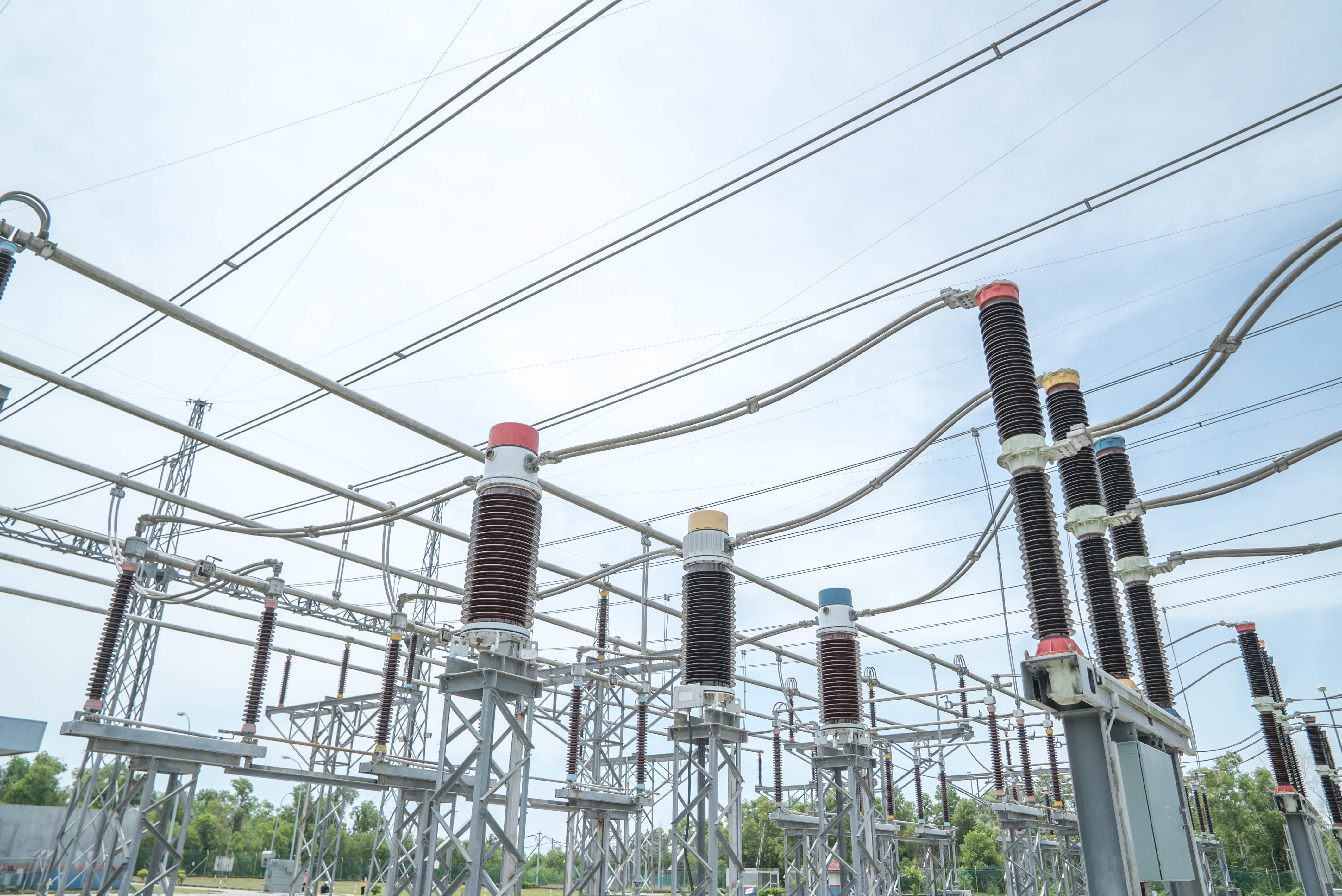
 Illustrative image – not actual.
Power Grid Corporation of India (PGCIL) would commission its 500-kilo volt Talcher Kolar high voltage direct current (HVDC) transmission line by August 2002. With the commissioning of this 1,400 km long transmission line, power supply to the southern region would go up by at least 2,000 MW. The transmission line covers Orissa, Andhra Pradesh and Karnataka.
The first 100 MW would flow into the grid by August
31, 2002, and be raised to 1,000 MW by mid-September. The grid would be in
position to transmit 2,000 MW by the end of 2002
The output received from Talcher would be converted
into alternating current at the Kolar station before being fed into the
regional grids. For evacuation of power to the regional grids, the HVDC line would
be supported with additional 400 KV high voltage alternating current lines to
Tamil Nadu, Andhra Pradesh, Karnataka and Kerala. Accordingly, new sub-stations
would be set up at Kolar, with 500 mega volt-amperes capacity transformers.
The economic benefit of the project has been
quantified at Rs.1,000 crore per annum for the eastern region and Rs.1,500
crore for the southern region.
According to PGCIL Chairman and Managing
Director, Mr R.P. Singh, the
final project cost was Rs.2,700 crore as against the earlier estimated Rs.3,865
crore. The project cost savings was mainly due to the reduction in the interest
rate during construction costs, and it was completed in a period 39 months
against the earlier planned 50 months.
Meanwhile, PGCIL was examining the proposal for
setting up one more HVDC terminal near Mysore in Karnataka. A feasibility study
was already under way by the Central Electricity Authority for setting up the
project. The planning of this second HVDC transmission would, however, coincide
with the setting up new generation capacity in Orissa. The projects that have been proposed to come
up in Orissa include the IB valley project, expansion of the NTPC super thermal
station and the Hirma super thermal project by Reliance Industries.