
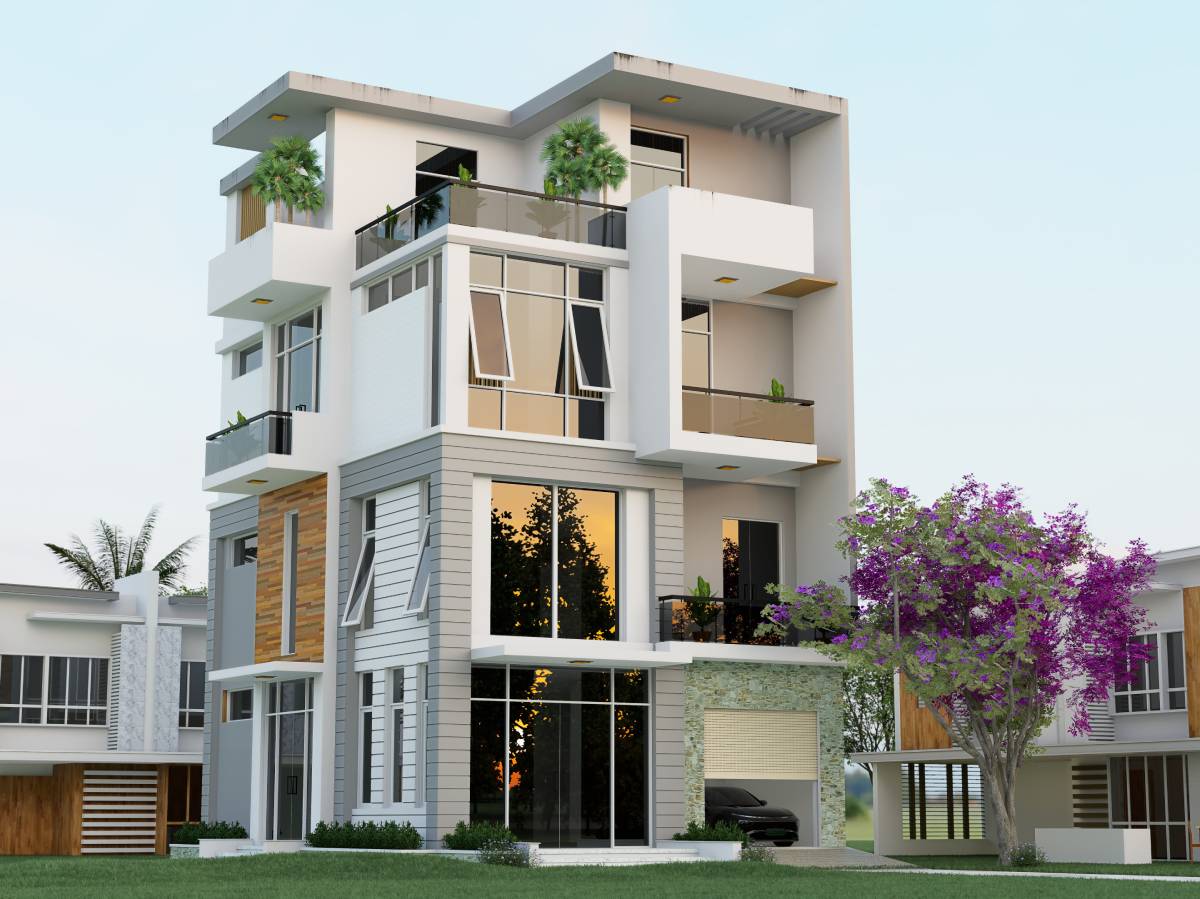
 Illustrative image – not actual.
The Maharashtra Cabinet has cleared its integrated township policy.
Under the policy, developers will be responsible for providing water, electricity, solid waste management facility, hospitals, parks and other facilities in the township. As a special concession, developers will not need permission for conversion of agricultural land to non-agricultural.
Also, they will have to pay just 50 percent development charges. For first time property buyers, the state government will offer a major concession in the form of upto 50 percent cut in stamp duty payment.
If the area under the township is 40 ha, then the developer gets 70 percent of basic permissible floor space index (FSI). If a developer has 200 to 500 ha, he will get 80 percent of FSI and, for over 500 ha, he will get 100 percent of FSI.
Developers can buy land directly from farmers. The state will also consider giving government land as per guidelines if the project is surrounded by government land.
In return, developers will have to build houses for economically weaker sections (EWS) and low-income groups having an area of 322 sq ft and 538 sq ft, respectively. As per the new policy, they will have to provide social housing at 20 percent of the total construction of FSI.
However, builders applying for permission under the new policy should have land that is contiguous.
In order to speed up clearances for such projects, the collector will have to give clearance within 45 days from the receipt of application, or state his reason for refusal. The new policy also sets strict deadlines for the divisional joint director of town planning. The official will have to send his remarks on a project’s master plan to the collector within two months. The state will levy a premium of 20 percent on projects being developed on hilltops, hill slopes and in afforestation zones. Under the new policy, a premium of 10 percent will be levied on projects coming up in public, semi-public and industrial zones, and 15 percent on those being set up on agricultural land.
The policy clearly specifies how much land has to be allotted by a developer for building schools, hospitals, maternity homes, business centres, malls, gardens etc. Besides this, developers will also have to make provision for non-polluting industries for employment generation.