
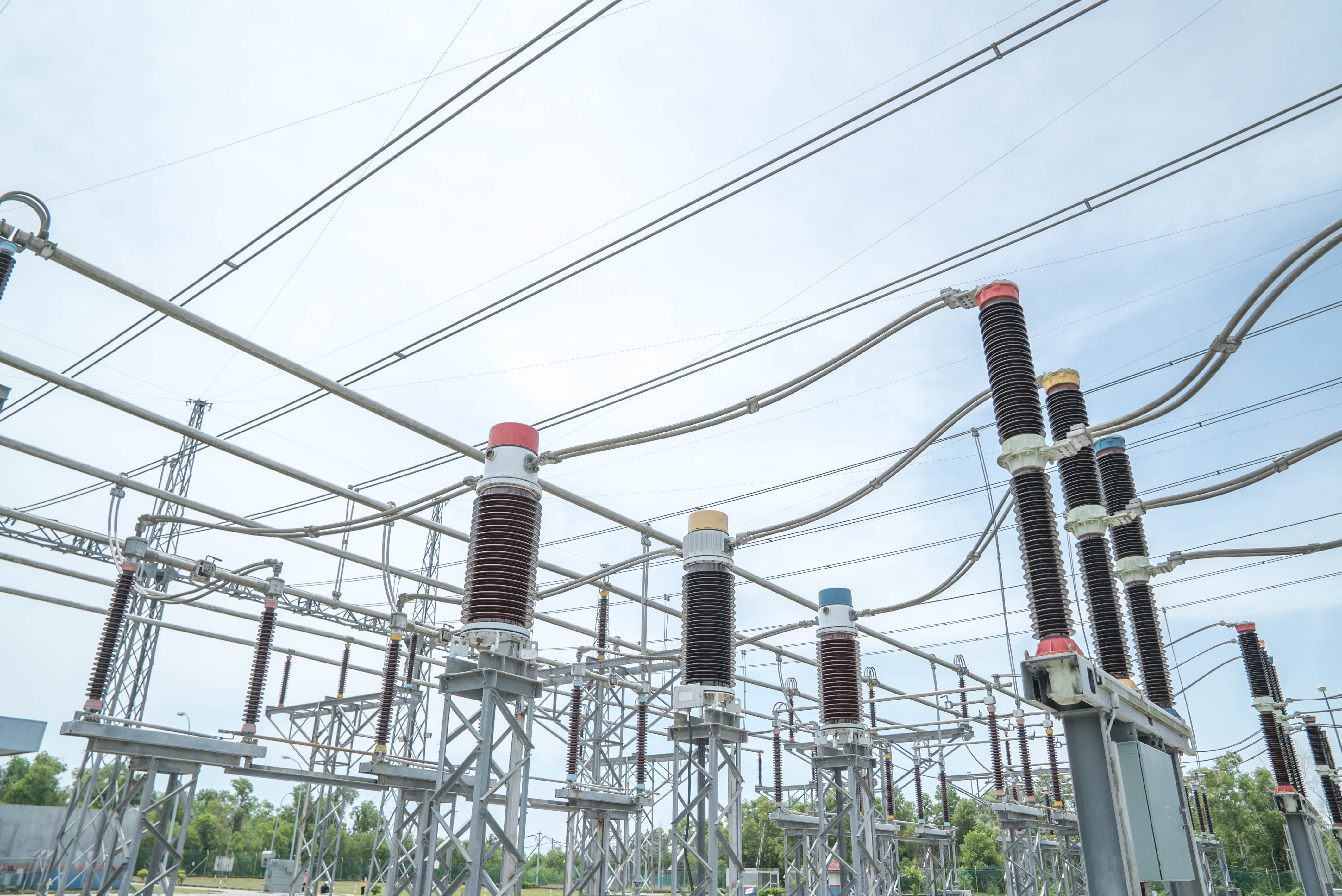
 Illustrative image – not actual.
The Karnataka government has decided to
privatise its power sector in 2002-03 after setting up four distribution
companies comprising the Bangalore, Mangalore, Hubli and Gulbarga centres.
All these companies would be separate entities
created by merging two or three circles.
The state government’s plan is contrary to its
initial plan to blend high and low value companies. The latest decision is in
line with the report submitted by the consultants, who had concluded that only
three circles would be financially viable - Bangalore, Mysore and Mangalore.
The high value companies comprise those with a
large proportion of high tension consumers and low distribution losses.
Conversely, the low value distribution companies will comprise those with high
distribution losses and a large proportion of low tension consumers. Both
Bangalore and Mangalore circles fall within the purview of high value circles.
Under the new arrangement, two high value
circles - Mysore and Tumkur - are to be merged with Bangalore to make it the
most profitable circle. This circle will then comprise at least three million
customers. In actual consumption terms, at least 70 per cent of the power is
being consumed by about 50 per cent of the customer base, mostly high tension
and low tension commercial enterprises.
This circle also comprises some agricultural
consumers, most of them are from the sugar belt of Mandya, one of the viable
agricultural customer bases in the state. It is logical that this circle would
be the first to be divested in line with the privatisation policy of
distribution circles. The state government is expected to realise maximum value
from the Bangalore circle out of the privatisation exercise.
All these circles would be started on the
basis of a zero-debt status in order to package them attractively. Bids would
be invited for privatisation of these circles during the course of 2002-03.
However, during the interim period, all these distribution companies would
function as subsidiary companies of the state-owned utility, Karnataka Power
Transmission Company Ltd (KPTCL). The equity in the distribution companies would
be held by KPTCL itself and the divestment proceeds are also expected to accrue
to it.
The resources raised would be used to create a
sinking fund of KPTCL for settling some of its outstanding liabilities,
including the pension liabilities. All the outstanding debts, including
multilateral credits extended for supporting technical improvement of the
distribution network in the state, are expected to be absorbed by KPTCL.
This model of three-tier unbundling is in line
with the model that has been adopted by Andhra Pradesh. The three-tier model
comprises several generation companies consisting of a single transmission
company and a clutch of distribution companies, each functioning as a regional
monopoly.