
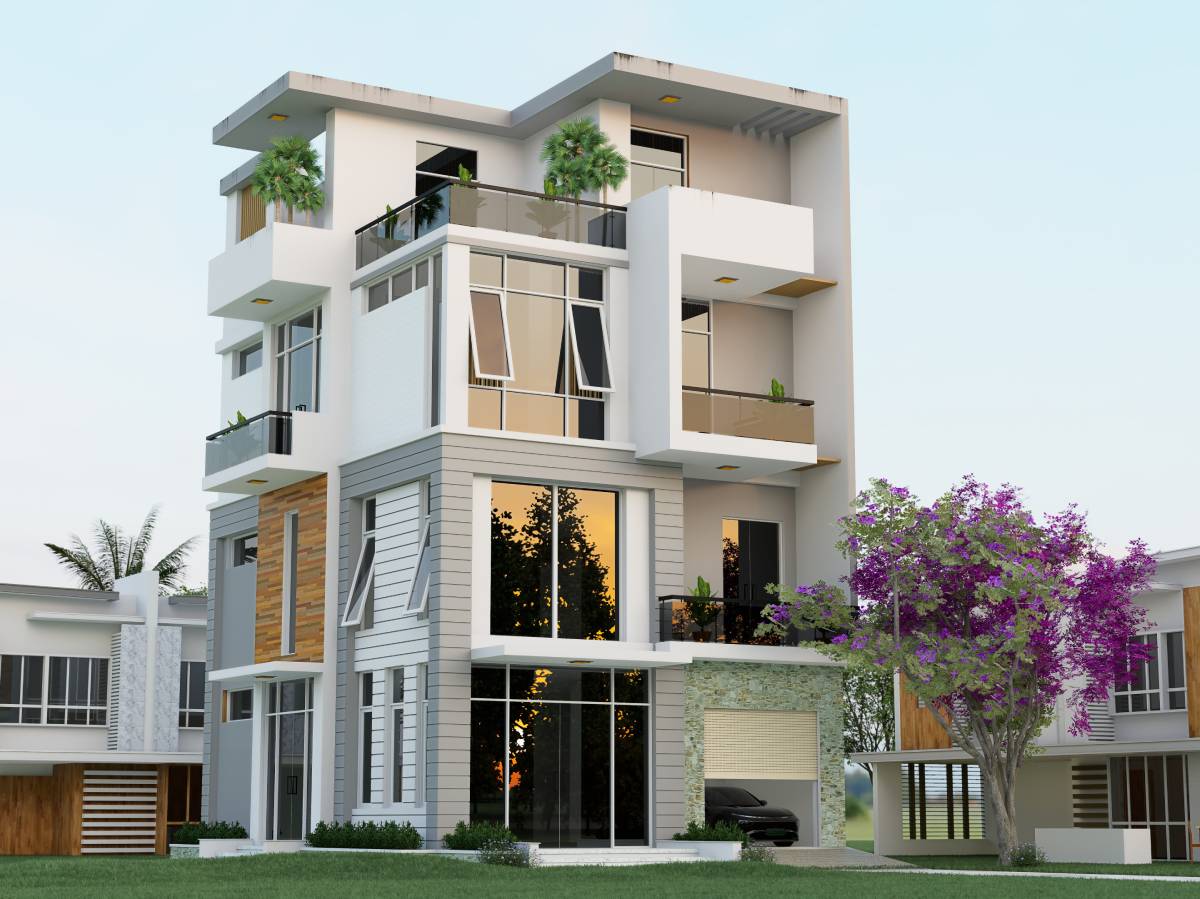
 Illustrative image – not actual.
The government has announced guidelines for foreign direct investment in development of integrated townships, including housing and building material.
The government has permitted FDI up to 100 per cent
for development of integrated townships, including housing, commercial
premises, hotels, resorts, city and regional level urban infrastructure
facilities such as roads and bridges, mass rapid transit systems and
manufacture of building materials. Development of land and providing allied
infrastructure would form an integrated part of township development.
FDI in the development of integrated townships would be subject to the following guidelines:
i.
The foreign company intending to invest, would have
to be registered as an Indian Company under the Companies Act, 1956 and would
be allowed to take up land assembly and its development as a part of Integrated
Township Development. All such cases would be processed by the FIPB on the
recommendation of the Ministry of Urban Development & Poverty Alleviation
and other Ministries / Departments concerned. The Ministry of Urban Development
& Poverty Alleviation will develop an exclusive cell to deal with such
cases.
ii.
The core business of the company seeking to make
investment, should be integrated township development with a record of
successful execution of such projects elsewhere.
iii.
The minimum area to be developed by such a company
should be 100 acres for which norms and standards are to be followed as per local
bylaws / rules. In the absence of such bylaws / rules, a minimum of 2,000
dwelling units for about 10,000 people will need to be developed by the
investor.
iv.
Conditions regarding the use of land for commercial
purposes, development charges, external development charges and other charges
as laid down in Master Plan / Bylaws, preparation of layout and building plan,
development of internal and peripheral development, development of other
infrastructure facilities including the trunk services etc., will be the
responsibility of the investor as per planning norms and standards on similar
lines as those applicable to local investors. In the absence of such standards
and norms, every state government may decide their own conditions for which the
Urban Development Plan Formulation and Implementation guidelines circulated by
the Ministry of Urban Development & Poverty Alleviation may serve as a
guiding principle.
v.
Land with assembled area for peripheral services such
as police stations, milk booths will be handed over free of cost to the
government / local authority / agency as the case may be.
vi.
The developer will retain the lands for community
services such as (i) schools (ii) shopping complexes (iii) community centres
(iv) ration shops (v) hospitals / dispensaries. These services will be
developed by the developer himself and shall be made operational before the
houses are occupied.
vii.
The developer, after properly developing playgrounds
and parks, will make it available to the local authorities free of cost.
viii.
The developer will ensure the norms and standards as
applicable under local laws / rules.
ix.
For companies investing in Special Economic Zones,
Foreign Investment Promotion Board may accord exemption to any of the
above-mentioned conditions on a case-to-case basis. This will, however, be an
interim measure till guidelines are evolved in due course in a need-based
manner.
x.
The investing foreign company should achieve clear milestones once its
proposal has been approved:
a.
The minimum capitalisation norm shall be US$10
million for a wholly-owned subsidiary and US$5 million for joint ventures with
Indian partner/s. The funds would have to be brought in upfront.
b.
A minimum lock-in period of three years from
completion of minimum capitalisation shall apply before repatriation of
original investment is permitted.
c.
A minimum of 50 per cent of the integrated project
development must be completed within a period of five years from the date of
possession of the first piece of land. However, if the investor intends to exit
earlier due to reasons beyond his control, it shall be decided by FIPB on a
case-to-case basis.