
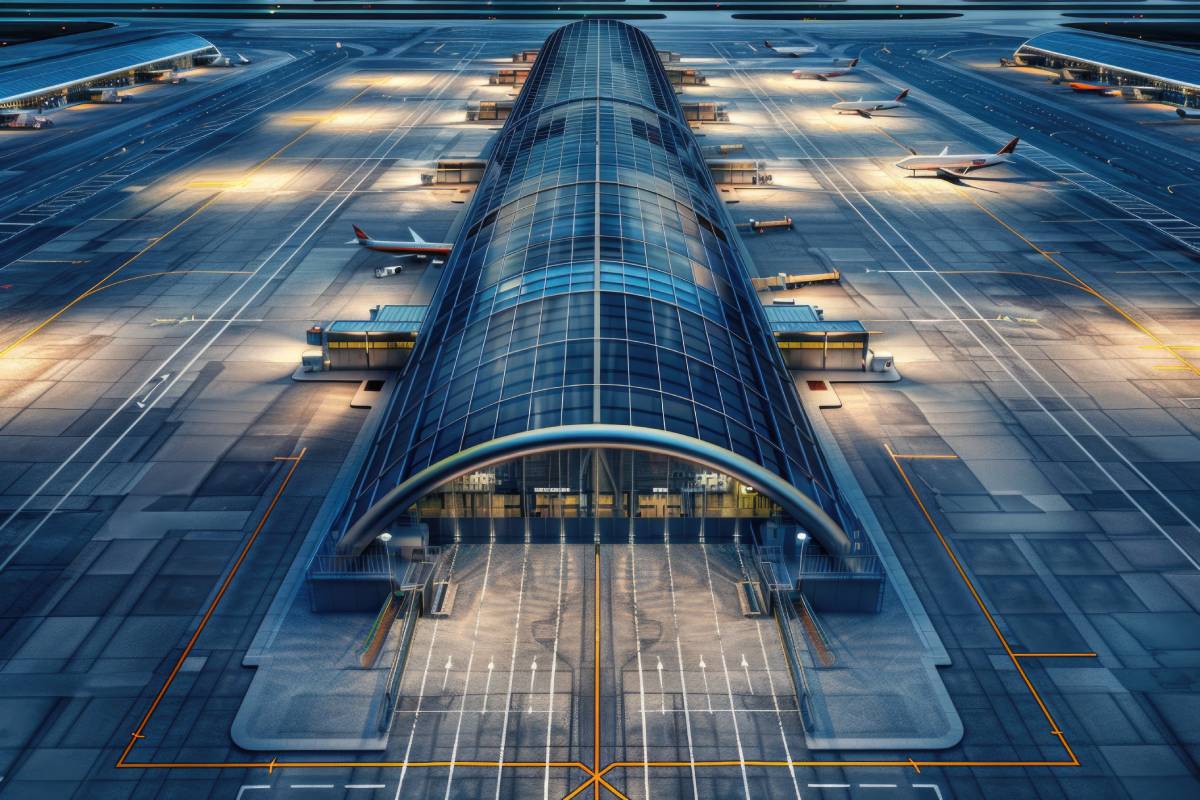
 Illustrative image – not actual.
Federation of Indian Chambers of Commerce & Industry [Western Region Council] has organized a Aviation Conference 2006 on 30th & 31st January 2006 at Hotel Intercontinental - The Grand, Near Sahar International Airport, Mumbai.
ProjectsToday has proposed to associate itself with the event as a media and knowledge partner. For more details on the event, please send e-mail to [email protected]
Principal Contact: Mr Atul Deshmukh, Manager - Infrastructure Cell, Western Region Council, FICCI ([email protected])
The following is a pre-event note that depicts the current trends in India's aviation sector and highlights the need and scope of the proposed conference.
Aviation Sector -- Current scenario & opportunities ahead
Aviation sector has undergone a sea change with the government opening up its skies and allowing domestic airlines to fly international destinations.
The next three years will experience a dramatic rise in aircrafts at Indian airports. The projected increase of domestic flights in Mumbai is from 46,805 in 2005-06 to 50,081 in 2006-07 while that of international flights is 1,18,177 in 2005-06 to 1,35,289 in 2006-07. More or less same trend is expected at Delhi. It is also expected that about 375 additional flights are to be added to Indian metro airports and this figure does not take into consideration foreign airlines. By 2010 Indian airports require to handle 90 – 100 million passengers. Looking at this explosive growth in Indian aviation sector India would require large number of aircrafts in the near future as it is happening in China.
Many new airlines like Kingfisher Airlines, Deccan Airlines, Spice Jet Airlines and many more have made an entry into the sector. There are many proposed joint ventures, mergers and tie-ups within airlines. This has lead to competition within the airline industry, pushing the air passenger fares downwards and development of low – cost airlines. But these low-cost airlines will sustain only if value added services are provided to select customers over sustained period of time. These developments in the aviation industry have lead to increase in the passenger as well as cargo traffic and ultimately increase in revenues. There are also substantial increases in air routes both domestic as well as international. The surplus revenues gaining out from increase in passenger/cargo traffic can be utilised for technology acquisition and improvements in R & D and innovation.
Ground handling facilities at Indian airports can be outsourced to major players in aviation sector. Currently with the aviation boom India is facing dearth of trained pilots and engineers. This has resulted in higher responsible jobs been done by less experienced professionals increasing the fear of accidents that can bring the aviation sector growth back to square one. This requires adequate training facilities for pilots and engineers. Indian airports are very poor on maintenance facilities at airports. Currently the aircrafts need to be carried to Colombo for maintenance. This involves huge costs to airlines. The need of the hour is to establish maintenance and engineering departments at the airport premises. When it comes to pricing of air passenger and cargo traffic the main problem is high cost of aviation turbine fuel and high tax that Indian airlines pay as compared to Foreign Airlines. Currently Aviation Turbine Fuel (ATF) is compelling the airliners to levy a surcharge on fuel. ATF comprises 25 per cent of the operational cost of airlines. Even there are problems with aircraft acquisition and leasing. The rigid regulatory controls restrain the airline companies (especially Indian Airlines and AirIndia) from acquiring aircrafts.
While developing airport infrastructure futuristic approach is necessary. Airports all over the world are no mere stopover points but destinations by themselves. They are well equipped with amenities like shopping malls, restaurants, health clubs, internet facilities, rest rooms and what not. Indian Airports need such type of developments to sustain with global trends.
Current boom in aviation industry opens opportunities for airport feeder services in the country that can be established through public private participation. These developments call for competent policies by the government and improved investments through FDI, Joint ventures and Consortiums. The ultimate result of all these developments is expected in the form of costs reduction and improvement in efficiency.
With this background Federation of Indian Chambers of Commerce and Industry (FICCI) Western Region Council, has organized a Aviation Conference 2006 on 30th & 31st January 2006 at Hotel Intercontinental – The Grand, Near Sahar International Airport, Andheri (E) Mumbai 400 099.
The main objective of this Conference is to address issues like Aircraft/Airport Maintenance, Ground Handling & Training & Alternative Financing Options for Aviation Sector Development.
Experts/professionals from areas like policy planners, airlines, airport development companies, airport/aircraft maintenance companies, aviation training companies, ground handling companies, air cargo services, aviation consulting and firms, shopping malls & retail stores & banks & financial institutions can attend the Conference.