
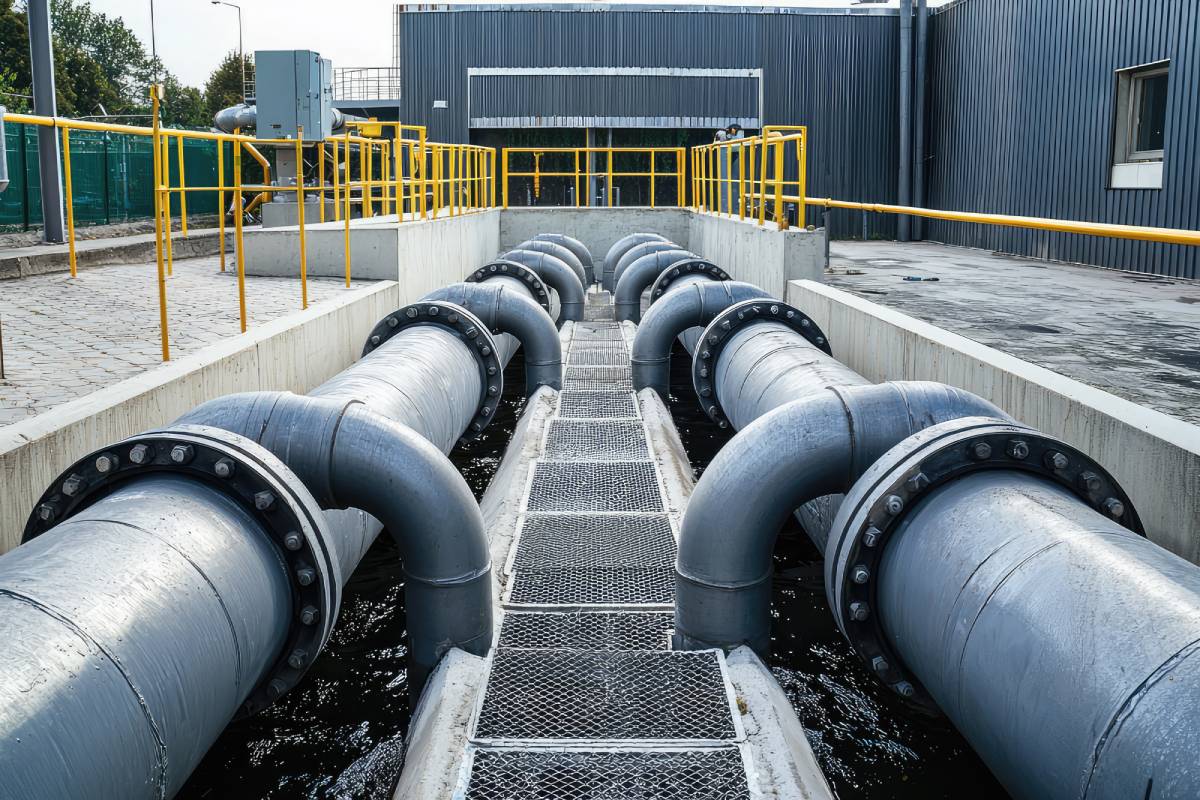
 Illustrative image – not actual.
La Mé drinking water treatment plant, one of West Africa’s largest drinking water treatment plants built in Côte d’Ivoire is expected to come online in July 2021.
The project has been designed and supervised by Veolia which is working hand in hand with PFO Africa on the implementation of the project with funding from the West African Development Bank (BOAD).
The drinking water treatment plant is built on an eight ha site. It has a planned capacity of 2,40,000 cu mtr per day. The treated water in this facility will be pumped from the nearby La Mé River.
After treatment, the drinking water will be transported via a 1,400 diameter pipeline over a length of 28 km to two water towers of 5,000 cu mtr each from where it will be delivered to consumers.
This project will directly meet the drinking water needs of several councils in the north of Abidjan, the capital city of the West African country, including Cocody, Abobo, and Yopougon, as well as in the east.
It will also allow more sustainable management of the aquifer around the city preventing both the depletion and pollution of groundwater resources, improving the living conditions of its occupants thereby.