
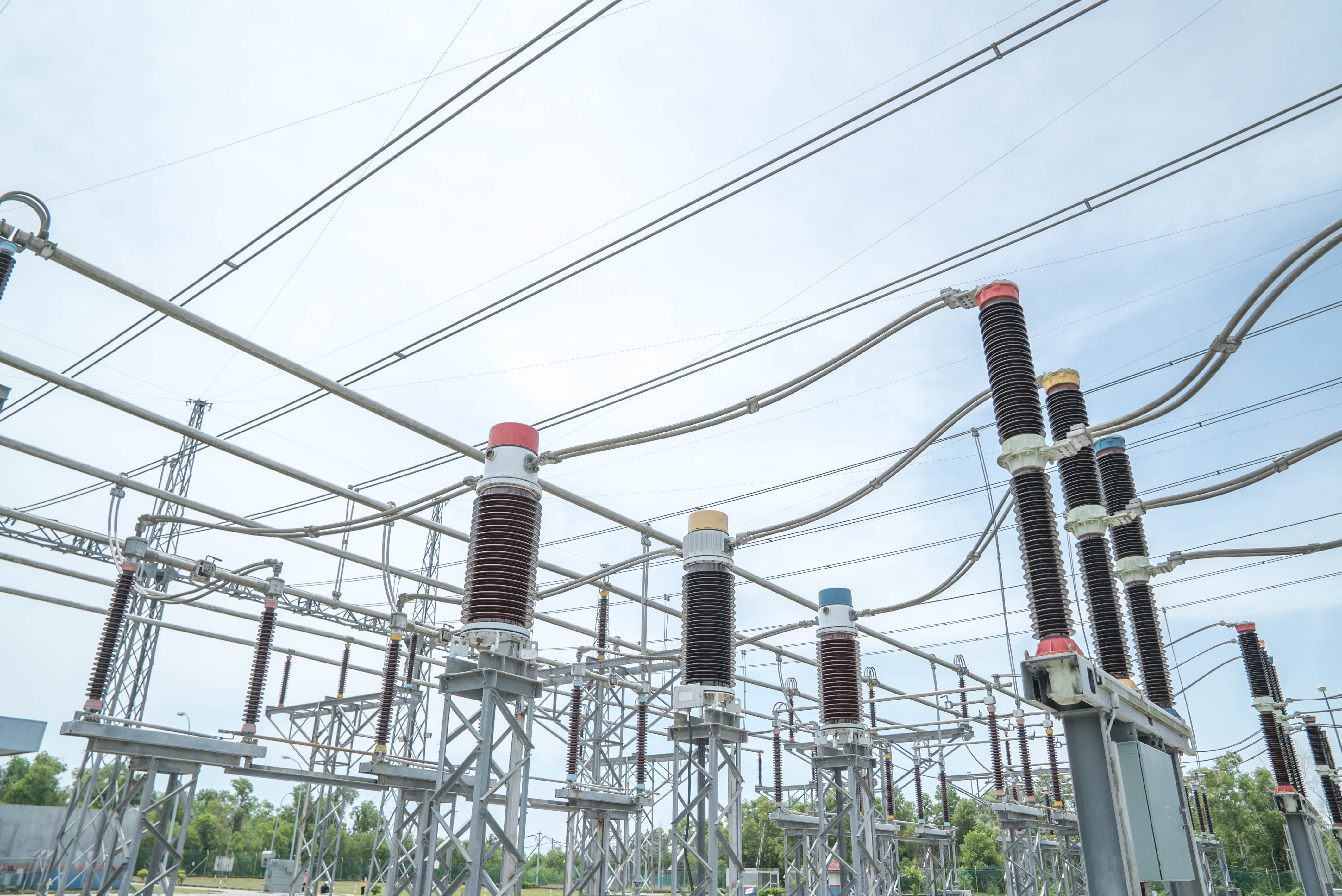
 Illustrative image – not actual.
The Union Cabinet, chaired by Prime Minister Narendra Modi has approved a reforms-based and results-linked, Revamped Distribution Sector Scheme.
The Scheme seeks to improve operational efficiencies and financial sustainability of all DISCOMs/power departments excluding private sector DISCOMs by providing conditional financial assistance to DISCOMs for strengthening supply infrastructure.
The assistance will be based on meeting pre-qualifying criteria as well as upon achievement of basic minimum benchmarks by the DISCOM evaluated on the basis of agreed evaluation framework tied to financial improvements. The implementation of the Scheme would be based on the action plan worked out for each state rather than a one-size-fits-all approach.
The Scheme will have an outlay of Rs 3,03,758 crore with an estimated GBS from the Central government of Rs 97,631 crore. It is proposed that the currently ongoing approved projects under the Schemes of IPDS, DDUGJY along with PMDP-2015 for the Union Territories of Jammu and Kashmir and Ladakh would be subsumed in this Scheme, and the savings of their GBS (approximately Rs 17,000 crore) would be part of the total outlay of the Revamped Distribution Sector Scheme under the existing terms and conditions till 31 March, 2022.
The funds under these Schemes will be available for the identified projects under IPDS and for the approved ongoing projects under Prime Minister’s Development Program (PMDP) for the Union Territories of Jammu and Kashmir and Ladakh under IPDS and DDUGJY till 31 March 2023.
The Revamped Distribution Sector Scheme aims to improve operational efficiencies and financial sustainability, by providing result-linked financial assistance to DISCOMs for strengthening of supply infrastructure based on meeting pre-qualifying criteria and achieving basic minimum benchmarks.
The Scheme would be available till 2025-26. REC and PFC have been nominated as nodal agencies for facilitating implementation of the Scheme.
The objectives of the Scheme are reduction of AT&C losses to pan-India levels of 12-15 percent by 2024-25; reduction of ACS-ARR gap to zero by 2024-25; developing institutional capabilities for modern DISCOMs; improvement in the quality, reliability, and affordability of power supply to consumers through a financially sustainable and operationally efficient distribution sector.
The Scheme provides for annual appraisal of the DISCOM performance against predefined and agreed upon performance trajectories including AT&C losses, ACS-ARR gaps, infrastructure upgrade performance, consumer services, hours of supply, corporate governance, etc. DISCOMs have to score a minimum of 60 percent of marks and clear a minimum bar in respect to certain parameters to be able to be eligible for funding against the Scheme in that year.
The Scheme has a major focus on improving electricity supply for farmers and providing daytime electricity to them through solarisation of agricultural feeders. Under the Scheme, works of separation of 10,000 agriculture feeders would be taken up through an outlay of almost Rs 20,000 crore, which would be highly beneficial to farmers who would get access to dedicated agriculture feeders providing them reliable and quality power. This Scheme converges with the Pradhan Mantri Kisan Urja Suraksha Evem Utthan Mahabhiyan (PM-KUSUM) Scheme, which aims to solarise all feeders, and provide avenues for additional income to farmers.
A key feature of the Scheme is to enable consumer empowerment by way of prepaid smart metering to be implemented in Public Private Partnership (PPP) mode.
While in all 25 crore smart meters are planned to be installed during the Scheme period, priority would be given to install prepaid smart meters in a mission mode in the first phase in (i) all Electricity Divisions of 500 AMRUT cities, with AT&C losses less than 15 percent (ii) all Union Territories (iii) MSMEs and all other Industrial and Commercial consumers (iv) all government offices at Block level and above (v) other areas with high losses.
It is proposed to install approximately 10 crore prepaid smart meters by December, 2023 in Phase-I. The progress of installation of prepaid smart meters would be monitored closely, especially those in government offices, to enable their installation in a time-bound manner.
Agricultural connections will be covered only through feeder meters. Along with the time-bound implementation of prepaid smart metering for consumers, it is also proposed to take up System metering at Feeder and Distribution Transformer (DT) level with communicating feature simultaneously in PPP mode.
Artificial Intelligence would be leveraged to analyze data generated through IT/OT devices including system meters, prepaid smart meters to prepare system generated energy accounting reports every month to enable DISCOMs to take informed decisions on loss reduction, demand forecasting, Time of Day (ToD) tariff, renewable energy (RE) integration and for other predictive analysis.
All special category states including North-Eastern states of Sikkim and states/Union Territories of Jammu and Kashmir, Ladakh, Himachal Pradesh, Uttarakhand, Andaman & Nicobar Islands, and Lakshadweep will be treated as special category states.
For Prepaid Smart metering, grant of Rs 900 or 15 percent of the cost per consumer meter worked out for the whole project, whichever is lower, will be available for other than special category states.
For special category states, the corresponding grant would be Rs 1350 or 22.5 percent of the cost per consumer, whichever is lower.
For works other than smart metering, maximum financial assistance given to DISCOMs of other than special category states will be 60 percent of the approved cost, while for the DISCOMs in special category states, the maximum financial assistance will be 90 percent of the approved cost.